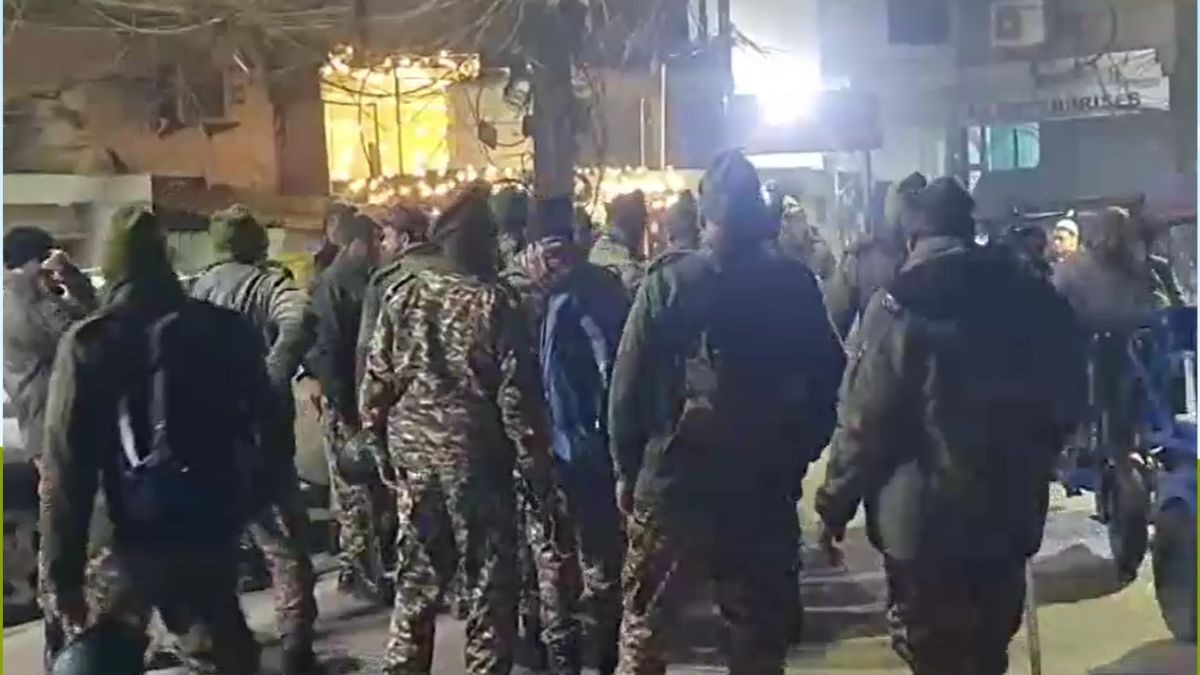
Delhi’s shelter homes struggle with overcrowding, poor conditions as temperatures drop to 4.2°C, leaving many homeless and patients without adequate protection.

Channu Shah’s Struggle for Shelter in Delhi’s Cold
Sixty-year-old Channu Shah lay on a pavement outside AIIMS Delhi’s Gate Number 4. He was wrapped in a thin shawl that offered little protection against the icy air. The minimum temperature in Delhi dropped to 4.2°C, marking the coldest January night in two years and the season’s lowest so far.
Shah, a tuberculosis patient from Madhya Pradesh, traveled hundreds of kilometers for treatment. With his next hospital appointment a week away, he tried to stay at a nearby Delhi Urban Shelter Improvement Board (DUSIB) night shelter. He could not afford to rent accommodation or return home.
He expressed hope for priority because he was a senior citizen and a patient, but he was turned away. “The caretakers said it is impossible. The shelters are full. We have no choice but to sleep here,” he said, holding a plastic sack filled with medical files while his wife sat beside him, trying to shield him from the cold.
Weather and Air Quality Conditions
The maximum temperature on Saturday was 20.2°C, an increase from 19.7°C recorded on Friday. The India Meteorological Department (IMD) issued a yellow alert for Sunday and Monday. Forecasts suggest possible cold wave conditions and moderate fog in the morning. The city experienced moderate to dense fog on Saturday, leading to over 550 flight delays at the Delhi airport.
The air quality remained in the “very poor” category. The 24-hour average air quality index (AQI) was recorded at 346 (very poor) at 4 PM, according to data from the Central Pollution Control Board (CPCB), worsening the winter cold.
Conditions in Night Shelters
Shah’s situation is not unique. Night after night, homeless people, daily-wage workers, and patient attendants seek shelter from the cold. During a spot check at nine shelters near AIIMS and Safdarjung Hospital, only two were broadly adhering to all prescribed norms. The remaining seven showed significant deficiencies, including overcrowding, lack of hot water, and unhygienic conditions.
| Shelter Status | Adhering to Norms | Deficiencies |
|---|---|---|
| Checked Shelters | 2 | 7 |
According to the Winter Action Plan 2025–26 issued by DUSIB, shelters must provide mattresses, bed sheets, pillows, blankets, electricity, lighting, drinking water, toilet facilities, bathing arrangements, and hot water. Caretakers must be present in every shift, and no charges are to be collected for using shelter facilities.
The government reported that 197 shelter homes were operational, housing 7,092 persons. An additional 200–250 waterproof tent shelters are to be set up during winter to meet rising demand. DUSIB’s chief executive officer, Rupesh Kumar Thakur, acknowledged a shortage of shelters around AIIMS and Safdarjung. He mentioned that the board has written to AIIMS seeking permission to set up makeshift tents on campus.
Personal Accounts of Shelter Seekers
Many people struggle to find shelter. Kamal, 35, from Jharkhand, whose son is undergoing cancer treatment, said he has spent multiple nights walking to shelters, only to be refused entry. “Every shelter says there is no space. I have slept on the road for days. In this cold, you feel your bones freezing,” he said.
Caretakers at the makeshift shelters confirmed that demand far exceeds capacity. One caretaker near AIIMS Gate Number 5 said they deny at least 100 patients and attendants every day. “We already put two to three people on one bed. Beyond this, it is impossible,” he said.
Ranjesh Shah, 41, from Bihar, who is undergoing treatment for a limb disability, said it took nearly 15 days of repeated inquiries to get shelter. “We push beds together so two people can sleep on one. Otherwise, more would be forced onto the roads,” he said.
Rama Devi, 48, a stomach cancer patient at a shelter near Yusuf Sarai, said that even inside the shelter, winter comfort is scarce. “There is no hot water. In this cold, hot water is a luxury,” she said.
Conditions in Various Shelters
At the Priyadarshini Colony shelter near Kashmere Gate, residents complained of insufficient beds and early closure of food distribution. Hari Mahto, a factory worker from Bawana, said he travels nearly an hour each night to reach the shelter. “By 8 PM, all beds are occupied. Food gets over quickly. Winters are very hard,” he said.
At the Chabi Ganj shelter, over 40 men and women are housed, but there is no water supply. Residents said they had not used the washrooms for four to five days. The caretaker pointed to a broken motor and said a plumber had yet to arrive.
A visit to three shelters in west Delhi showed worse conditions. Hot water was unavailable at two, and toilets were clogged and unclean in one. At the Britannia Chowk shelter, three toilets were found blocked.
Sixteen-year-old Simran, who has lived in the shelter since birth, said, “We bathe using cold water. Sometimes, my mother heats water on a stove outside.”
At the Shivaji Park shelter, Hemraj, 53, a laborer who has stayed there for five years, said most residents avoid government-provided blankets. “They are extremely rough and cause allergies. We prefer donated blankets,” he said.
Only at the Raghubir Nagar shelter in Khyala did residents report relatively better conditions, as hot water was available and caretakers were responsive to needs.
Systemic Gaps in Shelter Provision
Non-government organizations working with homeless populations point to systemic gaps. Sunil Aklidia, director of the National Forum for Homeless Housing Rights, said the number of functional beds remains far below the need. He questioned whether winter preparedness exists only on paper. “Over the past decade, the government has purchased only about 1,000 blankets under winter action plans,” he said.
As Delhi’s winter deepens, the city’s night shelters have become a fragile lifeline for thousands. For many, however, the shelter door shuts early, leaving them to face the cold streets alone. Outside AIIMS, Channu Shah settled onto the pavement for another cold night, coughing into his shawl and curling up to keep warm.