Lucknow residents struggle with contaminated tap water due to damaged pipelines, affecting over 5.5 lakh households, sparking health concerns and demands for urgent repairs

Contaminated Water Supply Issues in Lucknow
As the nation discusses recent deaths from contaminated drinking water in Indore, residents in Lucknow, Uttar Pradesh, seek solutions for dirty tap water. Officials admit that many areas face water quality issues due to damaged pipelines, especially where sewer work is ongoing.
Lucknow has over 40 lakh residents. About 5.5 lakh households out of 7.5 lakh rely on government water supply. This issue has raised concerns among residents in Indira Nagar, Alambagh, parts of Gomti Nagar, and Jankipuram. They report making several complaints in recent months without any response.
Social activist Sangeeta Sharma, from Indira Nagar Sector A, stated that residents suffer from both contaminated water and sudden supply disruptions. She claimed that water supply was abruptly stopped without notice due to sewer work. “Hundreds of people were left without water overnight, with no alternative arrangements,” she said.
HT visited areas where water pipelines run alongside open drains, like the Sarkata drain and Mansoor Nagar Dhal near Kashmiri Mohalla in the Old City.
A Jalkal official, speaking anonymously, noted that many pipelines are decades old. If contamination issues arise, action is taken. Residents report that dirty, foul-smelling water is a common problem, forcing families to use bottled water or costly filtration systems.
| Fact | Details |
|---|---|
| Population of Lucknow | Over 40 lakh |
| Households relying on government water | 5.5 lakh out of 7.5 lakh |
| Water supply per day | 750 million litres |
| Water sources | Gomti, Kathauta lake, Sharda canal, groundwater |
| Reported contaminated areas | Guru Nanak Nagar, Gurudev Nagar, Chitragupt Nagar, Alambagh |
Jalkal general manager Kuldeep Singh stated that the department supplies 750 million litres per day (MLD) to around 5.5 lakh households through three water treatment plants and several tubewells. Lucknow draws nearly 300 MLD from the Gomti, about 80 MLD from Kathauta lake, and additional supply from the Sharda canal. The rest comes from groundwater extraction using tubewells at depths of 160 to 180 feet.
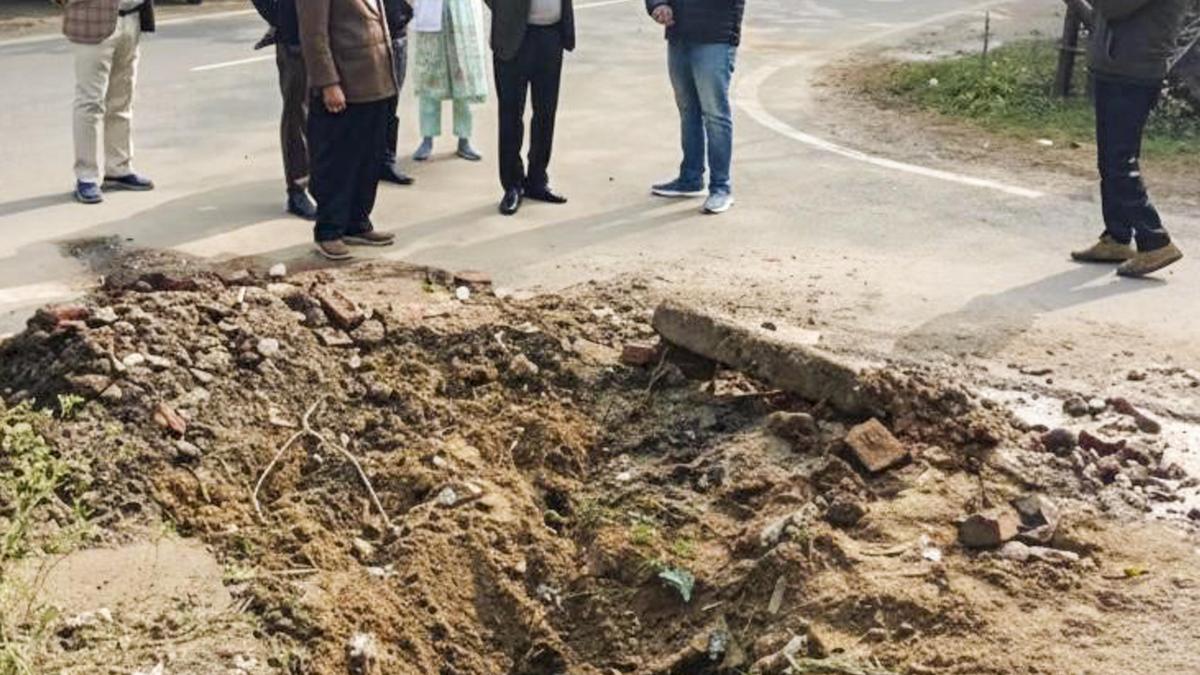
Singh acknowledged that several areas face water quality issues due to damaged pipelines, especially where sewer work is happening. Localities like Guru Nanak Nagar, Gurudev Nagar, Chitragupt Nagar, and parts of Alambagh have reported contamination after sewer lines were laid and old water pipelines were damaged. “We have sent proposals to the Jal Nigam for replacement of damaged and ageing pipelines in these areas,” he added.
Despite these assurances, residents and elected representatives say the problem has persisted for months. Activists and corporators claim they have repeatedly raised the issue with both Jalkal and Jal Nigam, but conditions have not improved.
Corporator Richa Adarsh Mishra mentioned that nearly 300 families in her ward are affected. “For the past two months, people have been receiving contaminated water in areas like Azad Nagar and Gopalpuri in Alambagh,” she alleged.
Mishra stated that officials from both departments are aware of the problem but have not provided a solution. “The main reason is decades-old water pipelines that are badly damaged. Unless they are replaced, contamination will continue,” she said.
According to her, when residents contacted the area’s executive engineer, they were told that water supply would remain disrupted for another 15 days. “After protests, a water tanker was sent but it could not enter the colony because the roads were narrow and the tanker was too large,” she said.
Akash Verma, another resident of Indira Nagar, claimed that contaminated water has been supplied for nearly two months, causing health issues. “People complained of jaundice, stomach infections, dehydration, and other illnesses. I was forced to install a water purification system at my home,” Verma said, adding that poor families cannot afford such systems and continue to suffer.
With rising complaints and fear, residents demand urgent replacement of old pipelines, better planning during sewer work, and accountability from civic agencies to prevent a health emergency.